Organization: Conner Prairie
Role: Experience Strategy / Concept Development
Concept Development: 2023-Present
Status: Conceptual / Unbuilt
Key Contributions: Experience Strategy | Placemaking | Campus Planning | Wayfinding | Signage Concept Design
The Opportunity
Conner Prairie began more than 50 years ago as a small collection of historic buildings assembled around what is now Prairietown. Over time, the museum has grown far beyond those origins, but Prairietown remains the experience many people most closely associate with Conner Prairie.
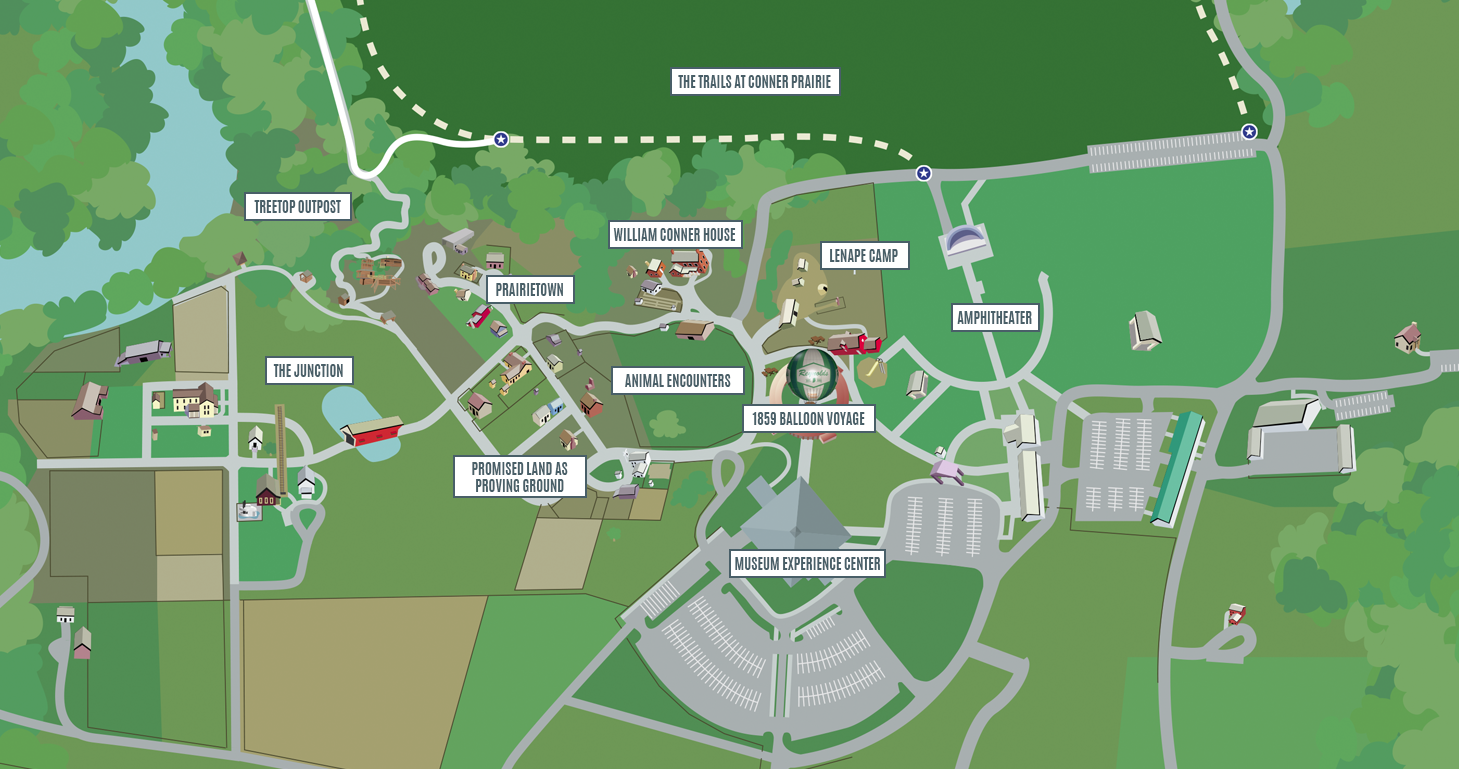
Today, the campus includes multiple historic experiences, extensive nature trails and outdoor recreation, a growing festival and entertainment program, and the new Museum Experience Center.
When I became Director of Experience Development, part of my role was to look across the museum and consider how our existing and future experiences could work together more cohesively. As we completed our Experience Master Plan and began planning the next generation of experiences, I saw an opportunity to create a clearer structure for the campus that could help guests understand the breadth of what Conner Prairie offers and make the property easier to navigate.
My Role & Approach
I began by looking at the campus from the guest’s perspective and considering how individual experiences could be grouped into larger destinations based on what guests could do and discover within them. From there, I looked at how those destinations could be connected through a central hub and how a consistent wayfinding system could help guests understand and navigate the campus.
I developed the destination framework, circulation concept, and prototype signage as interconnected parts of a larger approach to making the campus feel more cohesive and easier to understand.
Organizing the Campus
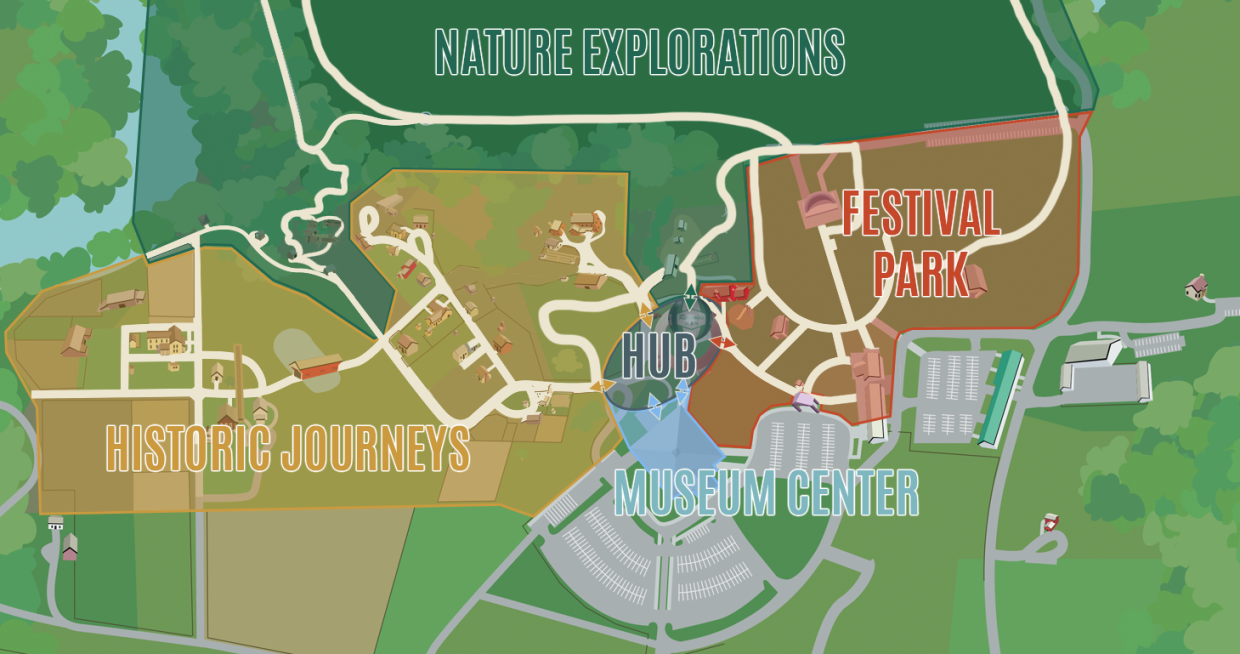
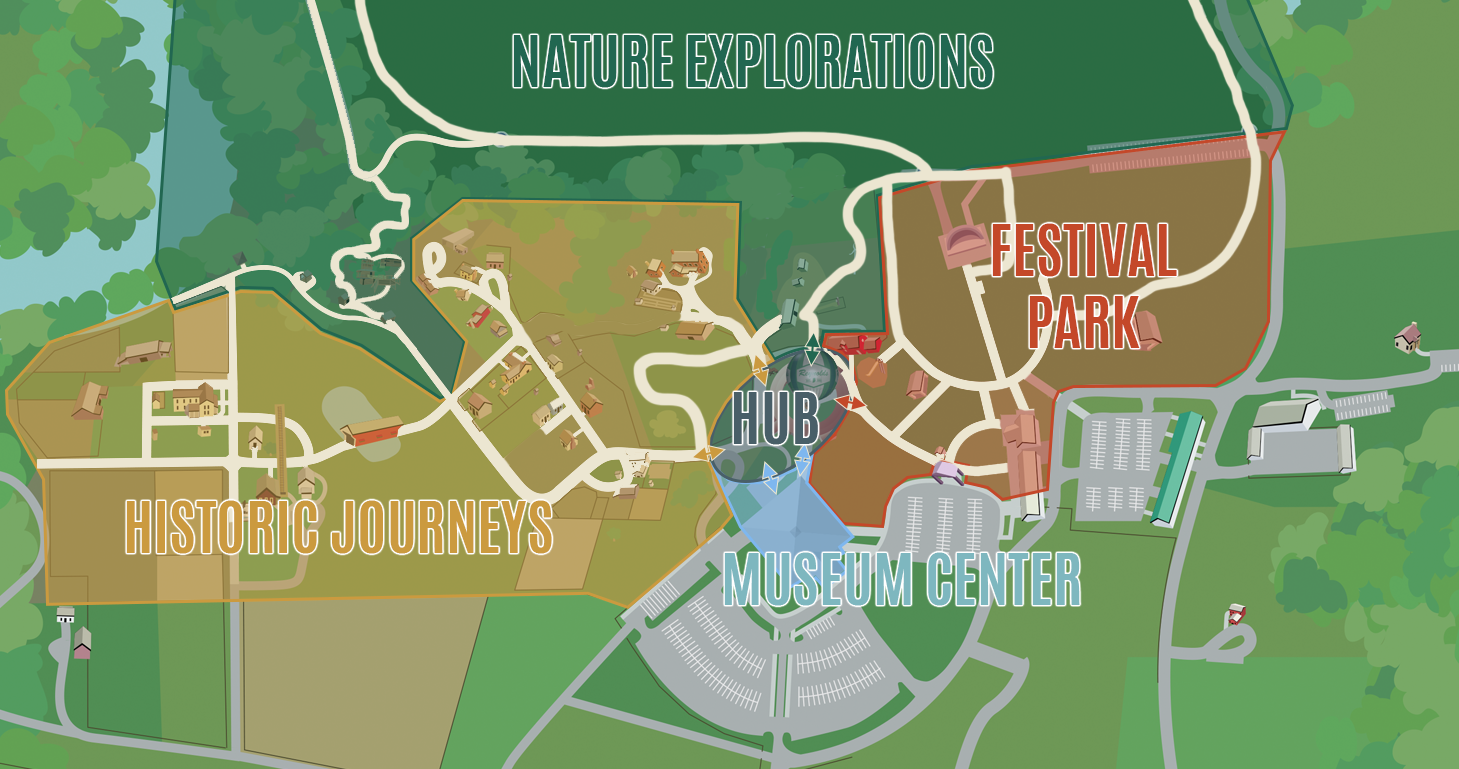
I grouped Conner Prairie’s existing and planned experiences into four larger destinations based on what guests could do and discover within them: Historic Journeys, Nature Explorations, Museum Experience Center, and Festival Park. The framework also accounts for planned changes to the campus, including the future relocation of the experience currently known as Lenape Camp.
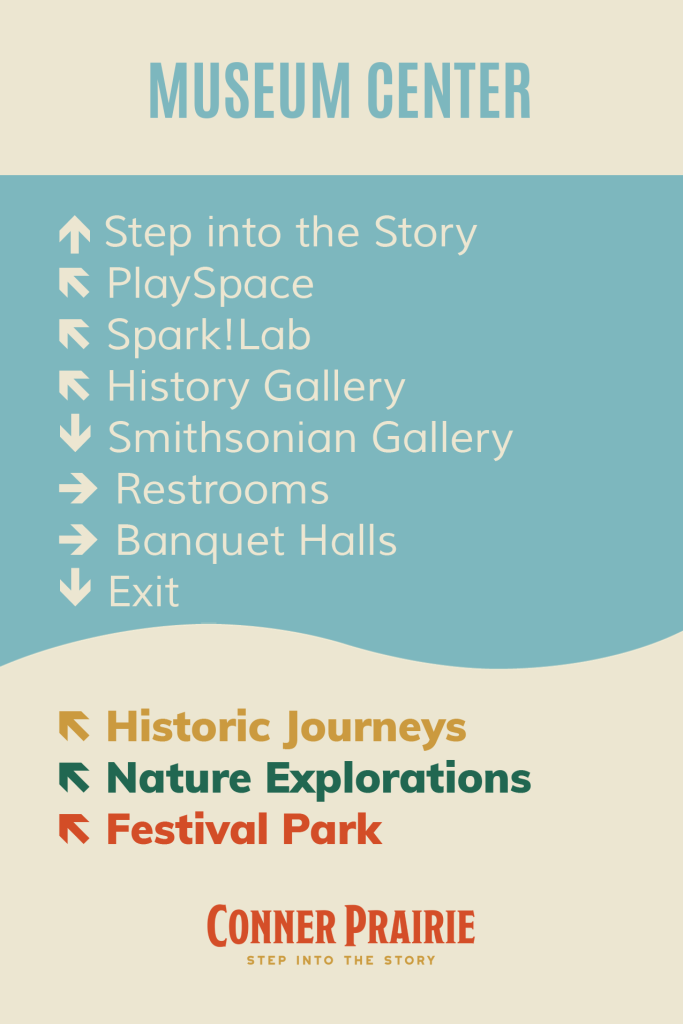
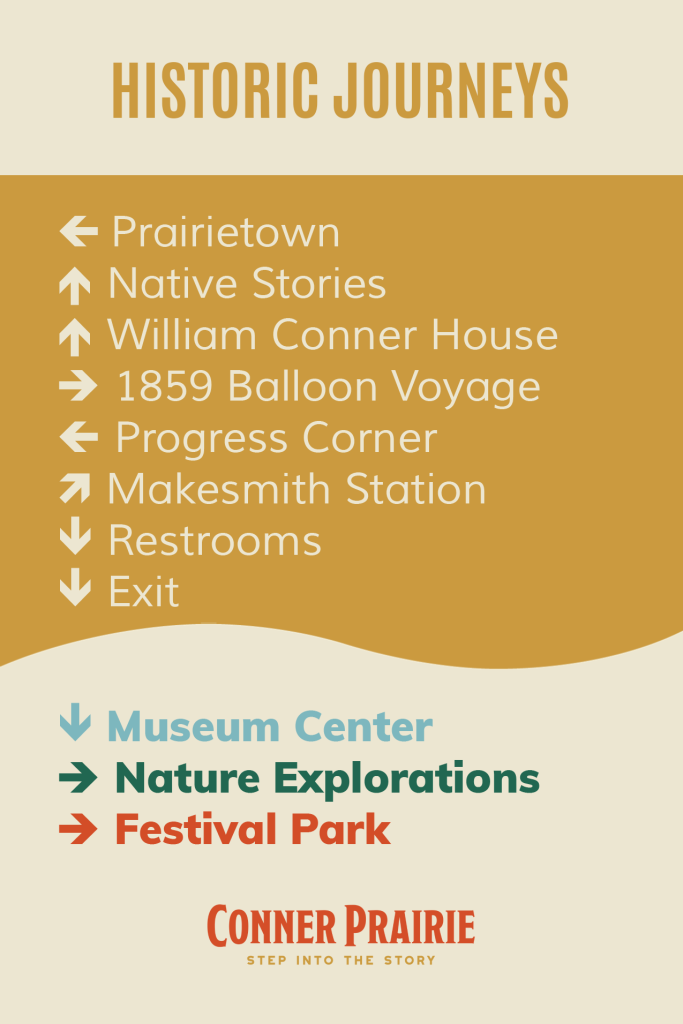
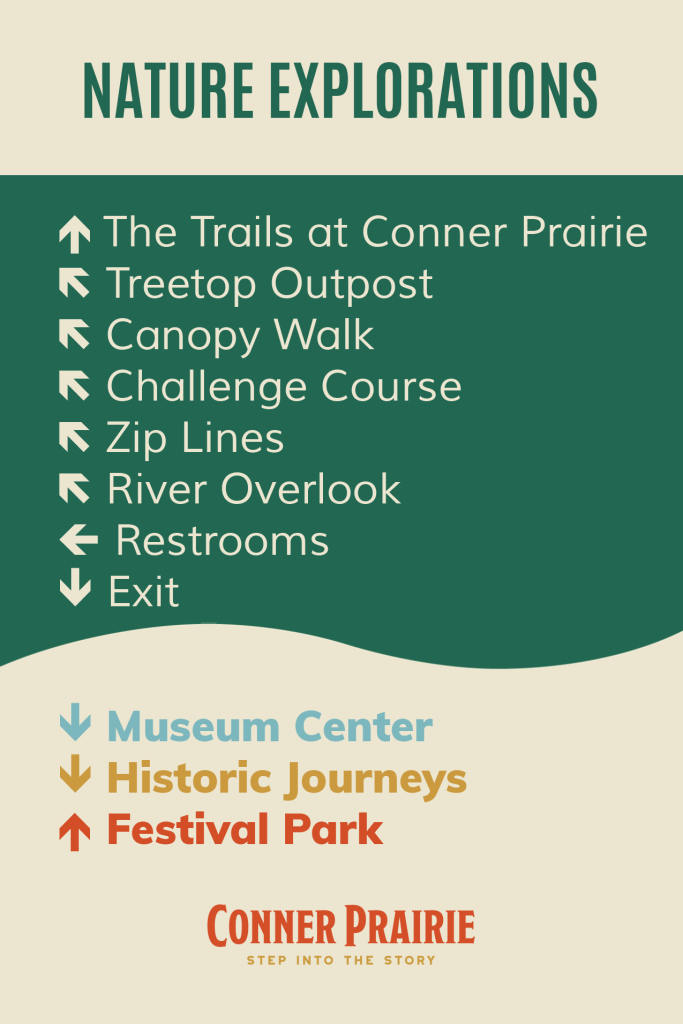
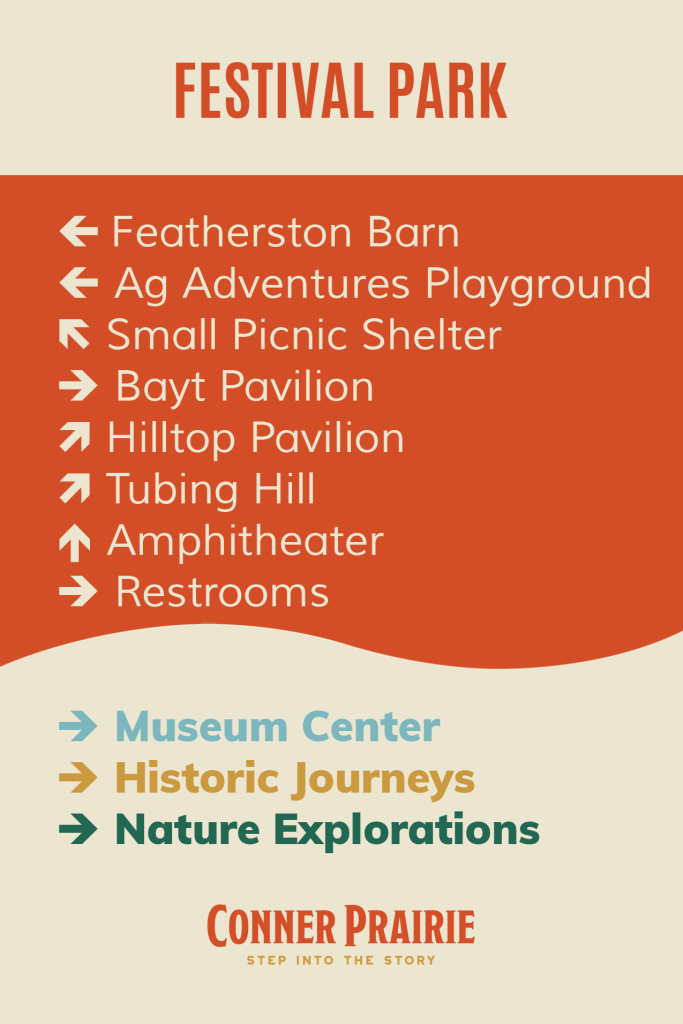
To make that organization useful to guests, I developed a prototype wayfinding system using Conner Prairie’s existing visual identity, with each destination assigned its own color. Each sign identifies the destination where the guest is standing and provides directions to the individual experiences within it. A second level of information points toward the other major destinations, helping guests understand both what they can find here and where they can go next.
Connecting the Campus
Organizing the experiences into destinations also raised another question: how should guests move between them?
I identified an area near the center of the campus that could serve as a central hub, giving guests a clear point of orientation and providing connections to each of the four destinations. Rather than relying on a single primary route through the property, guests could return to this central area as they moved from one destination to another.
The concept also identifies opportunities for new path connections and for shifting some existing guest paths to staff and service use.
Project Status
The campus placemaking and wayfinding concept has not been implemented and remains an exploration of how Conner Prairie’s existing and future experiences could be organized into a more cohesive and navigable campus. The signage shown here represents my concept designs and has not been developed into final production signage.
As new experiences continue to be developed, the framework provides one possible approach for helping guests understand how those experiences relate to one another and for making the growing breadth of Conner Prairie more visible.