Organization: Conner Prairie
Role: Client-Side Project Lead / Experience Development
Completed: 2026
Status: Built
Key Contributions: Project Leadership | Experience Development | RFP & Vendor Management | Creative Stewardship | Budget & Schedule
The Opportunity
Power of Place is an immersive, media-based introductory experience created for Conner Prairie’s new Museum Experience Center. Rather than simply orienting guests to the museum, the experience was conceived as an introduction to the place itself – a landscape shaped over centuries by natural forces, the people who have called it home, and the White River that connects their stories.
The experience needed to establish that larger sense of place while inspiring guests to explore the histories, environments, and stories they would encounter throughout the rest of their visit to Conner Prairie.
My Role & Approach
I served as Conner Prairie’s primary project representative, administering the RFP process and working with the selected design team throughout development to help keep the project on schedule, within budget, and aligned with the creative and thematic goals established for the experience.
My role combined project leadership with creative stewardship. While the external team led the final experience design, I represented Conner Prairie’s interests throughout the process and contributed an early concept that helped establish ideas that carried forward into the finished experience.
Initial Concept Design
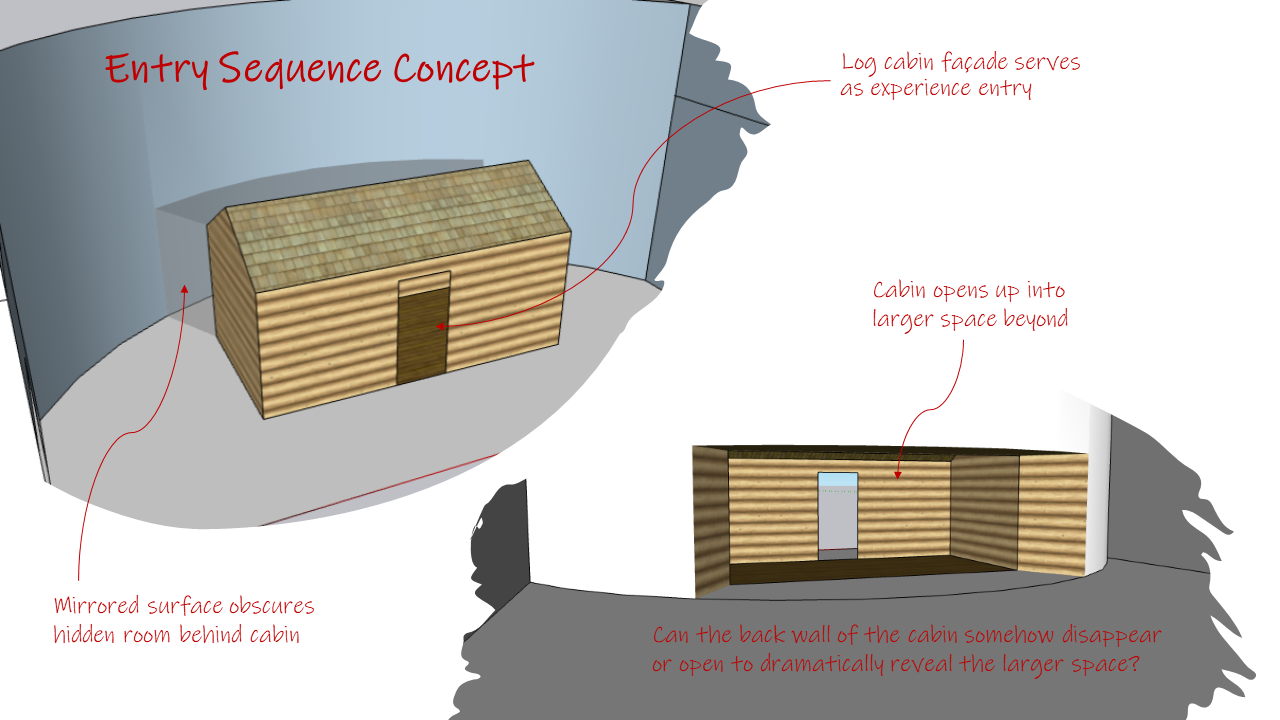
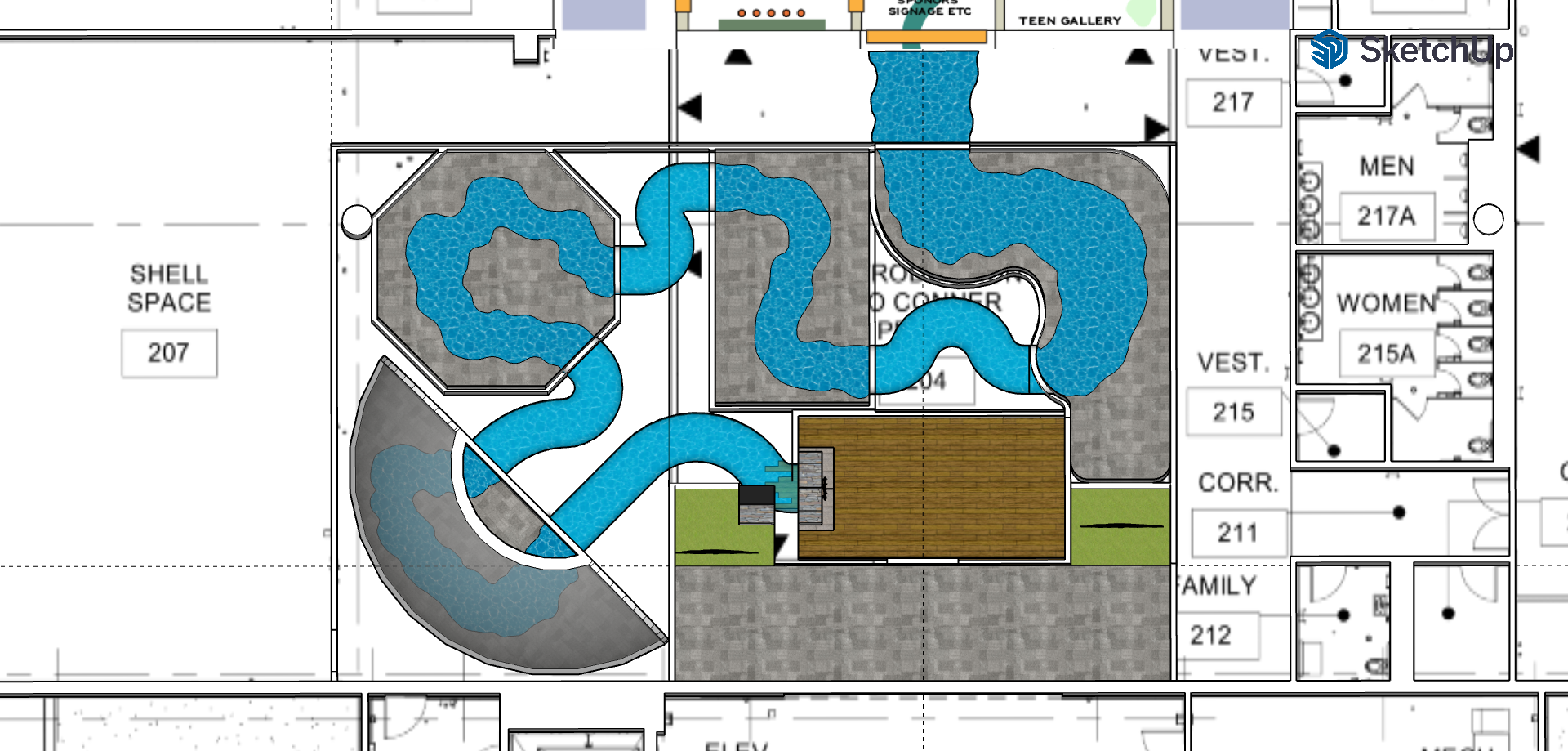
My initial concept explored the idea of using time travel to reveal layers of history hidden within a seemingly familiar environment. Guests would enter what appeared to be a traditional log cabin before discovering a concealed immersive space where projection mapping and environmental effects would send them traveling through time.
As the available footprint expanded, I explored a larger version in which a hidden passage through the cabin’s fireplace would plunge guests into the White River, which would become the connective thread for their journey through the region’s natural and human history.
Although these specific environments were not carried into the final design, the central idea of watching the landscape and its history unfold rapidly through time became an important element of the finished experience.
Design Development
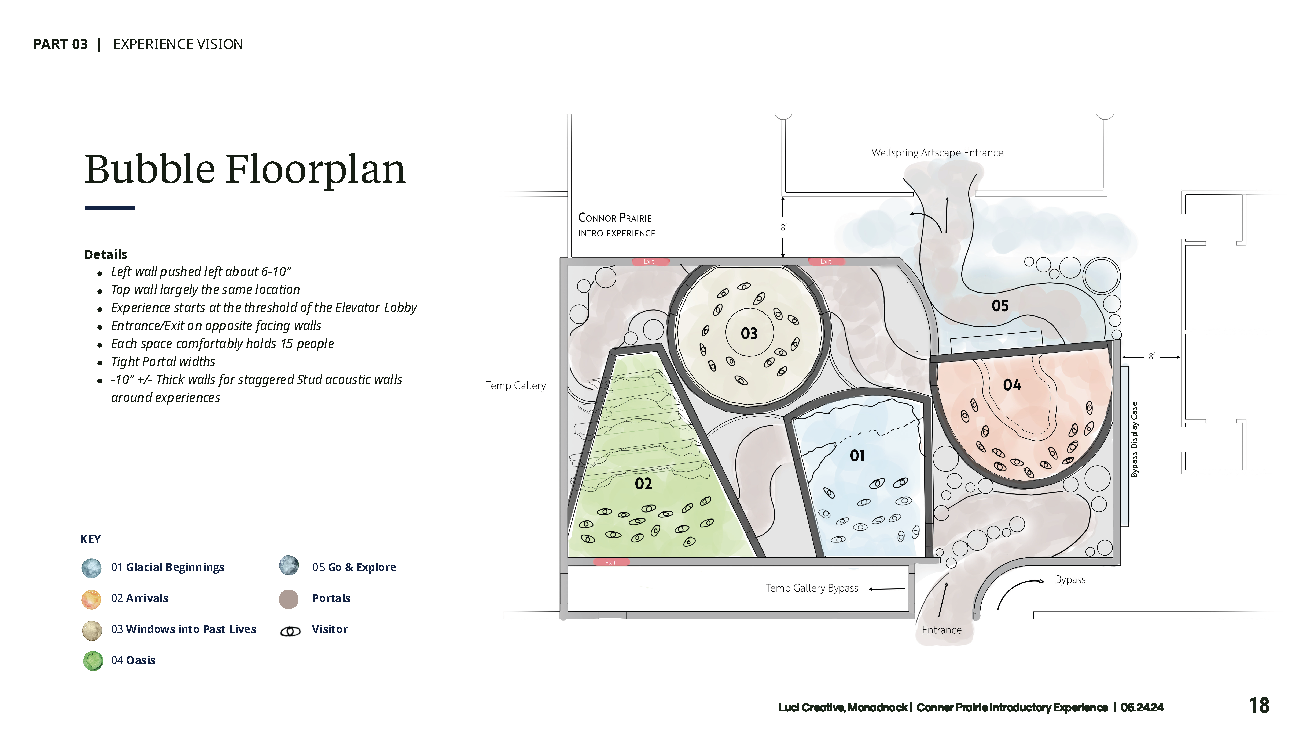
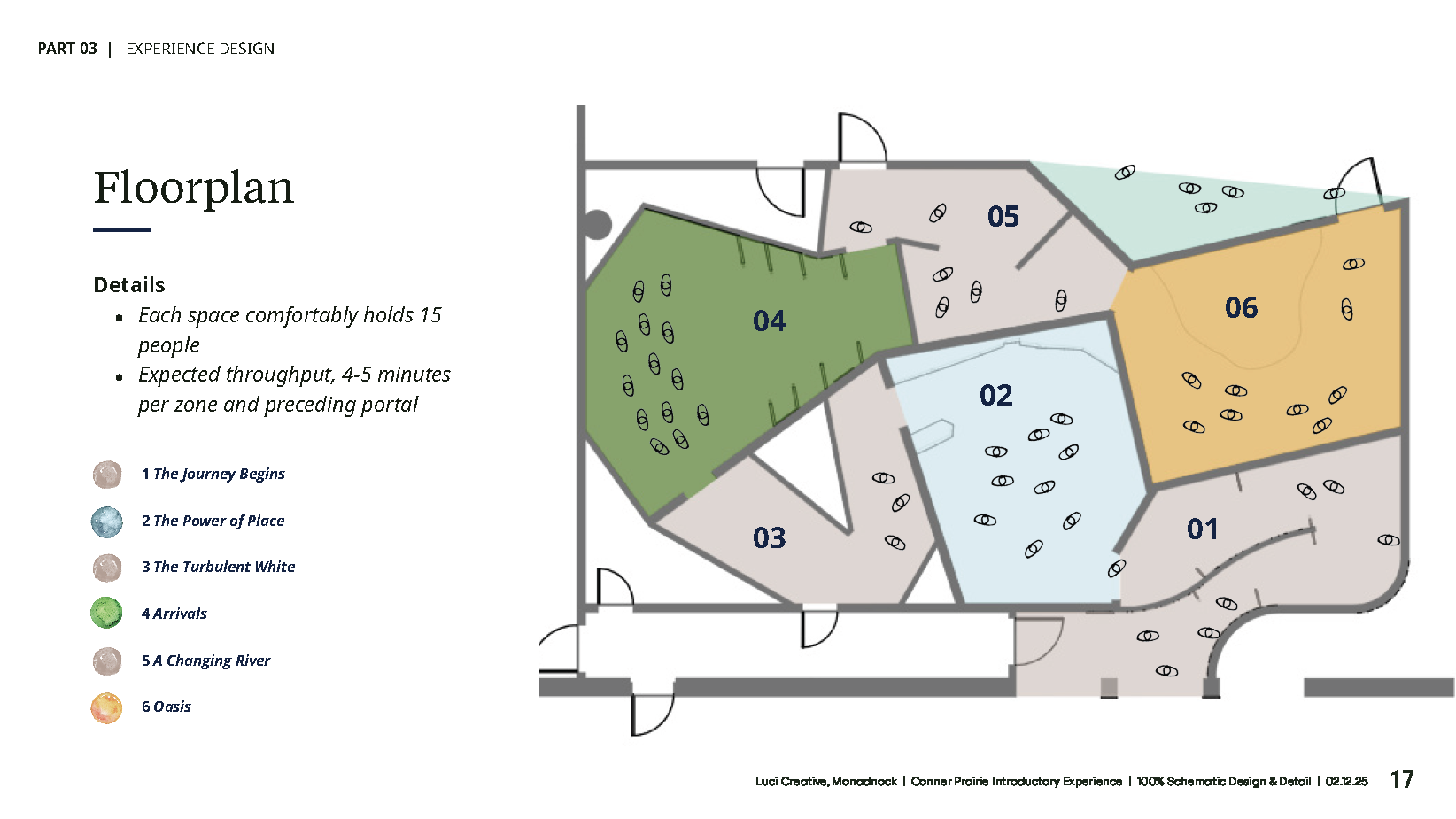
The experience continued to evolve through an iterative design process with the selected team. An early five-vignette concept was ultimately reduced to three as the team balanced creative ambition, available space, project priorities, and budget.
Throughout that process, I worked to help preserve the core intent of the experience while adapting its scope to real-world constraints. The White River emerged as the narrative device connecting the three remaining environments and carrying guests through different periods in the story of the land.
The Guest Journey
The final experience takes guests on a journey through the evolving relationship between land, water, wildlife, and people. A transitional forest environment moves guests away from the present before three immersive vignettes carry the story from the formation of the landscape through its human history and into the present day.
The Journey Begins – Transition
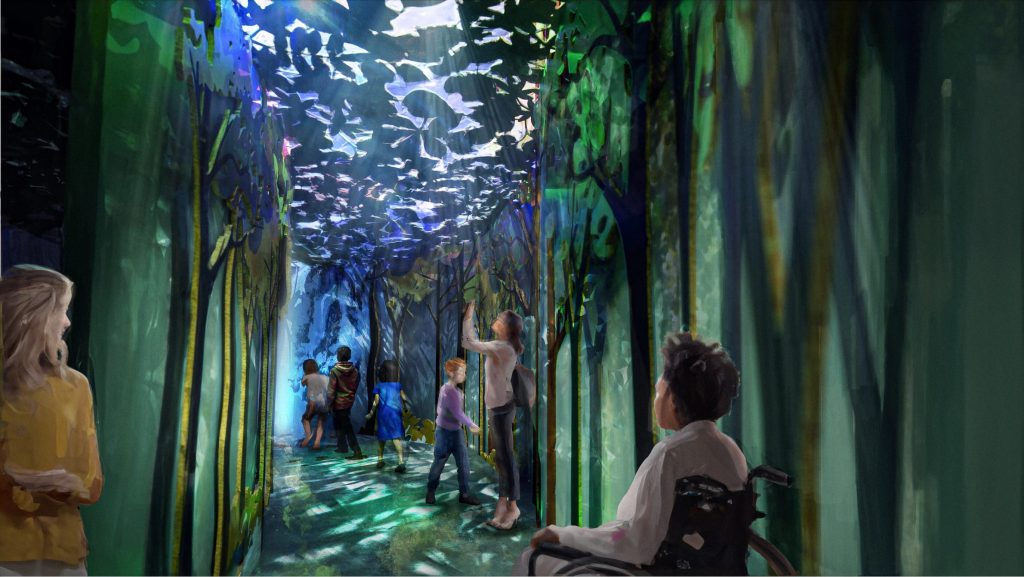
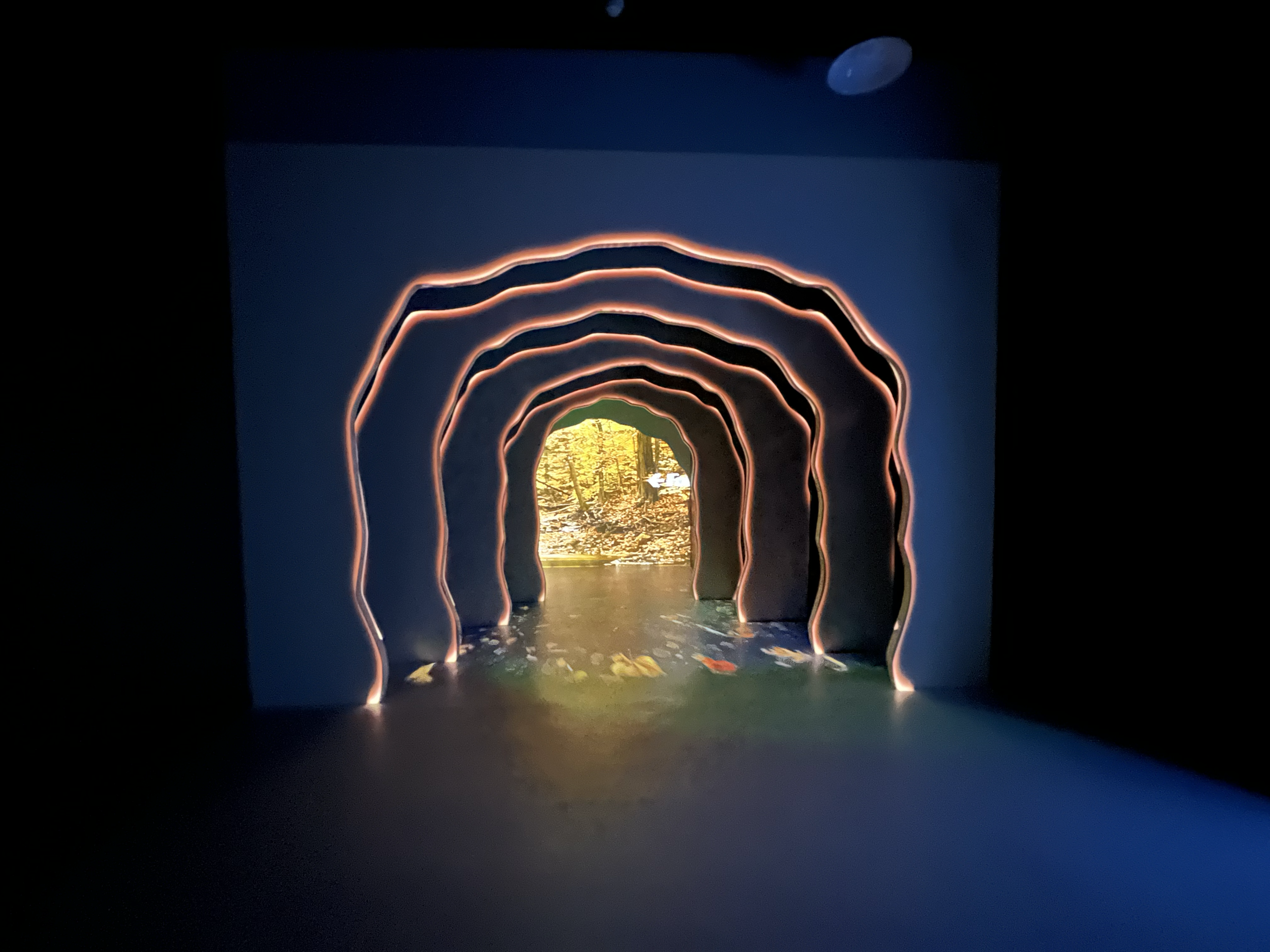
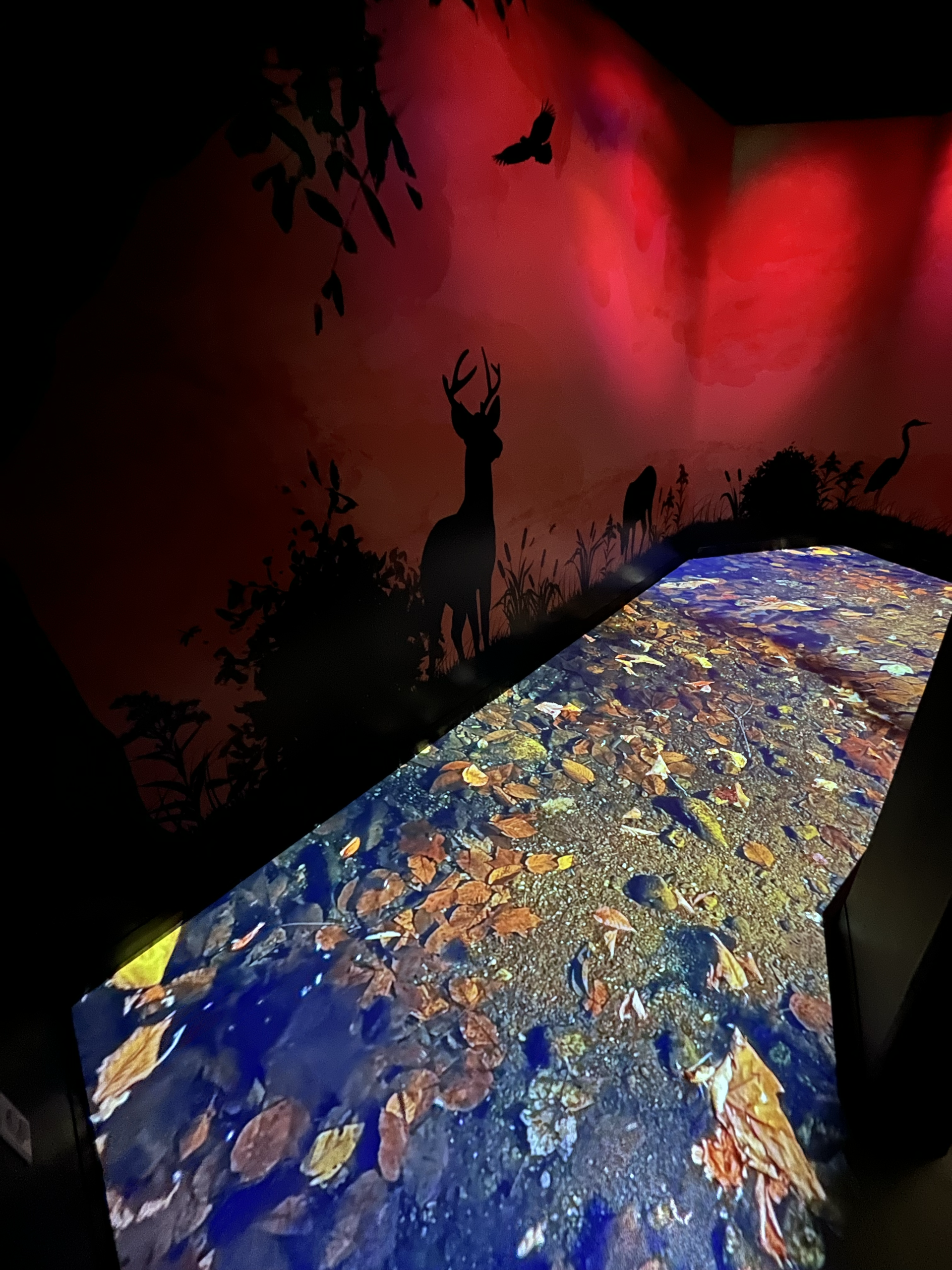
A forested transition space creates a threshold between the Museum Experience Center and the immersive journey, preparing guests to leave the present behind before traveling back to the formation of the landscape.
Vignette 1 – Formation
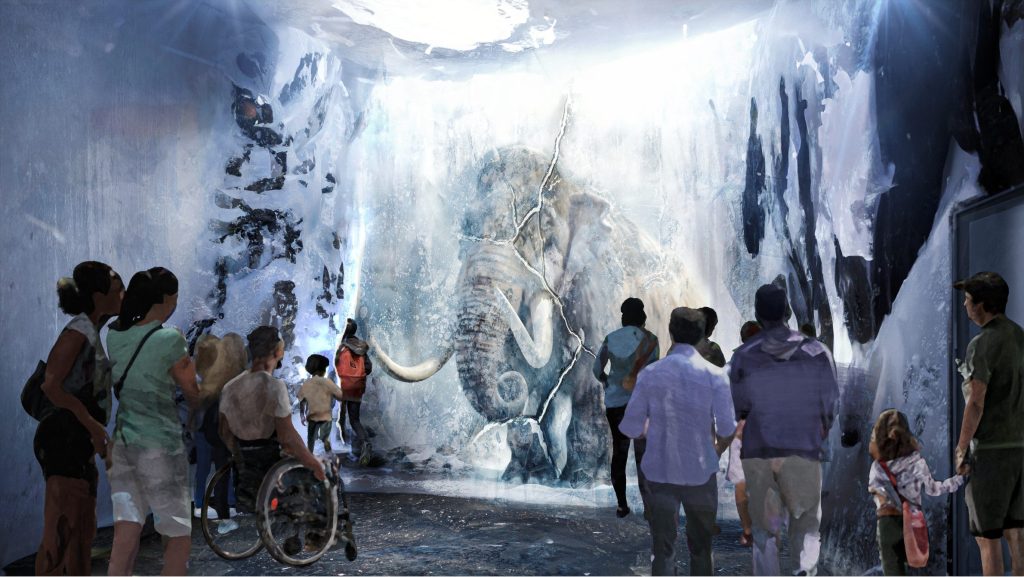
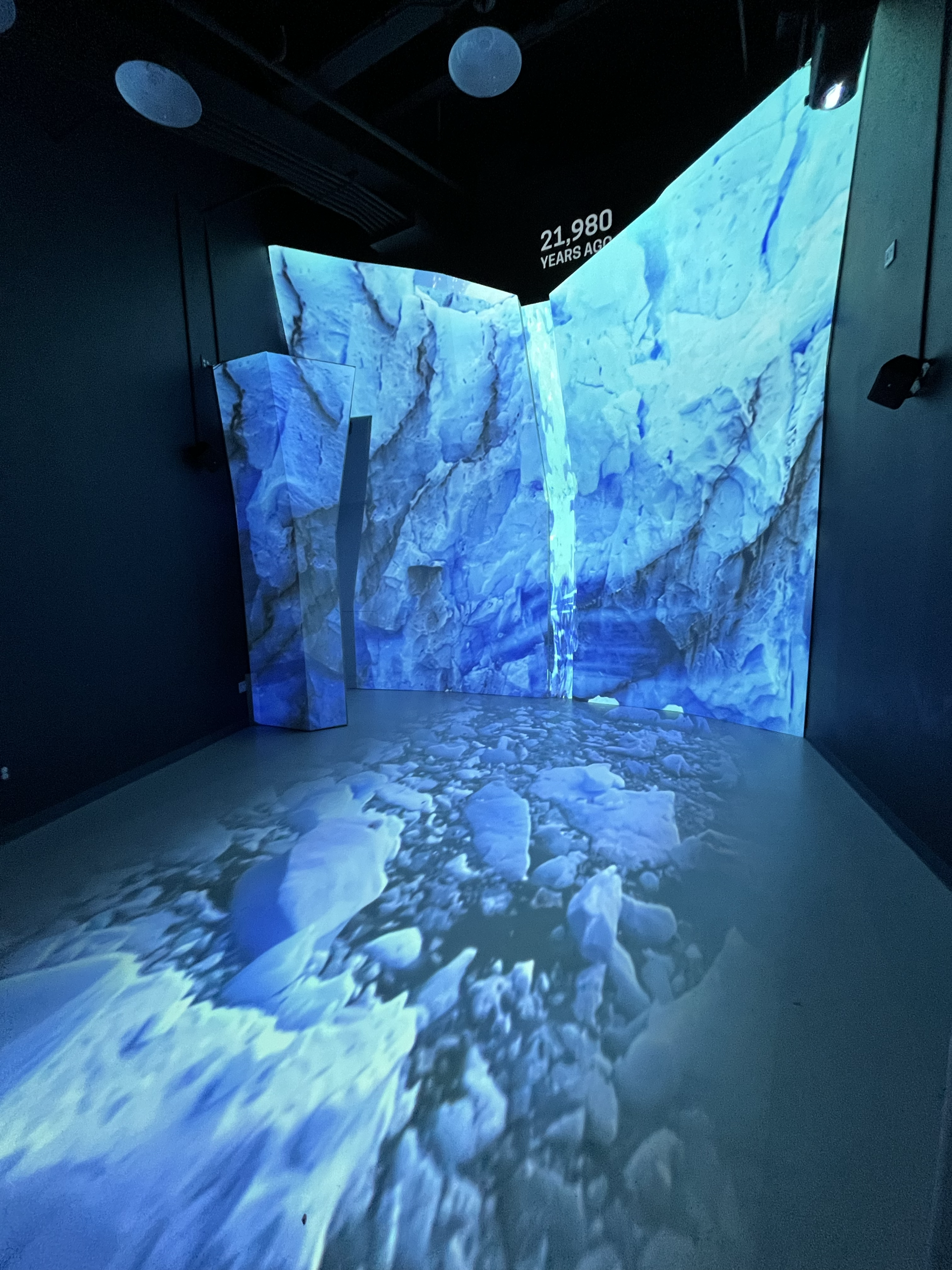
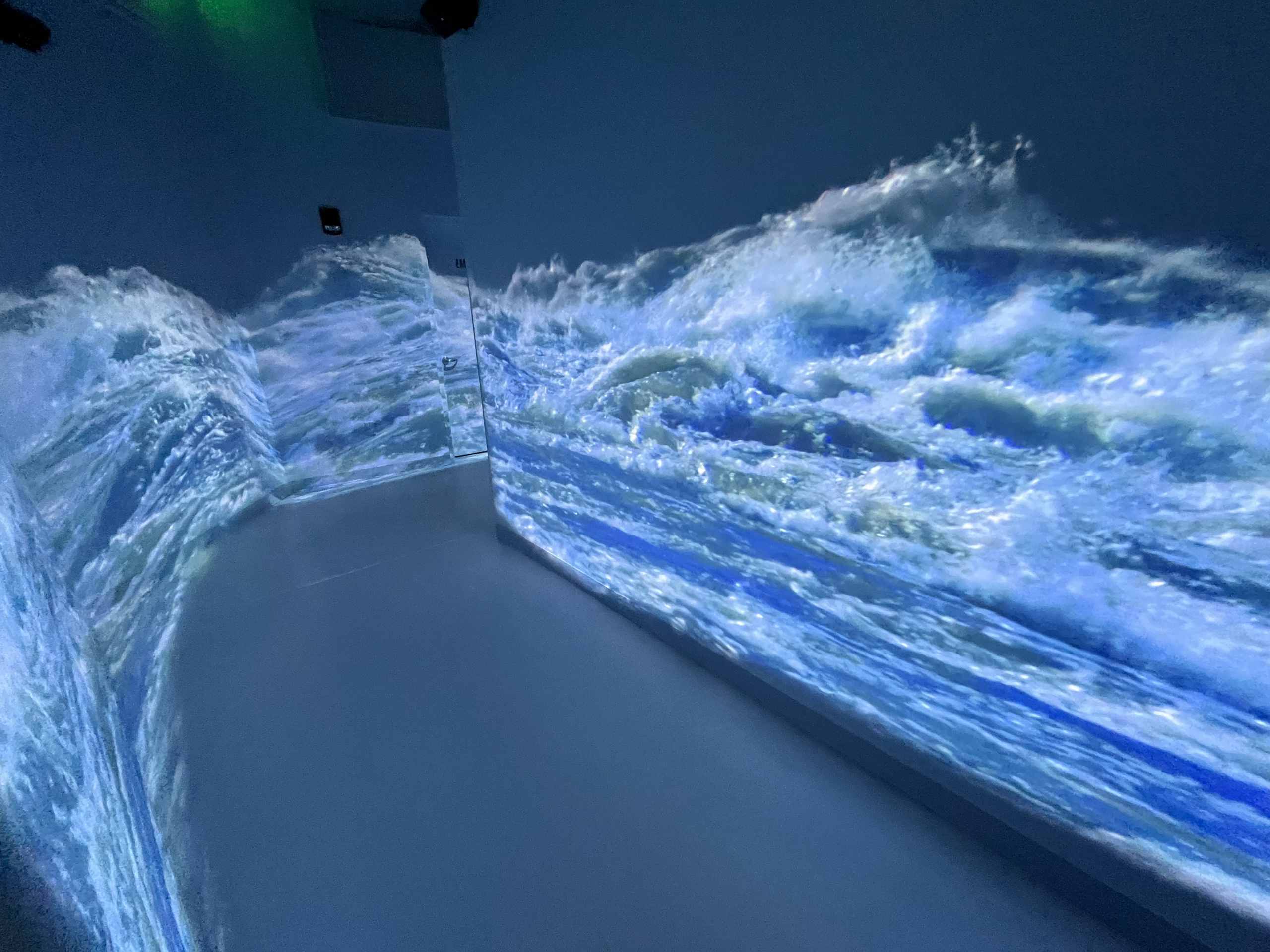
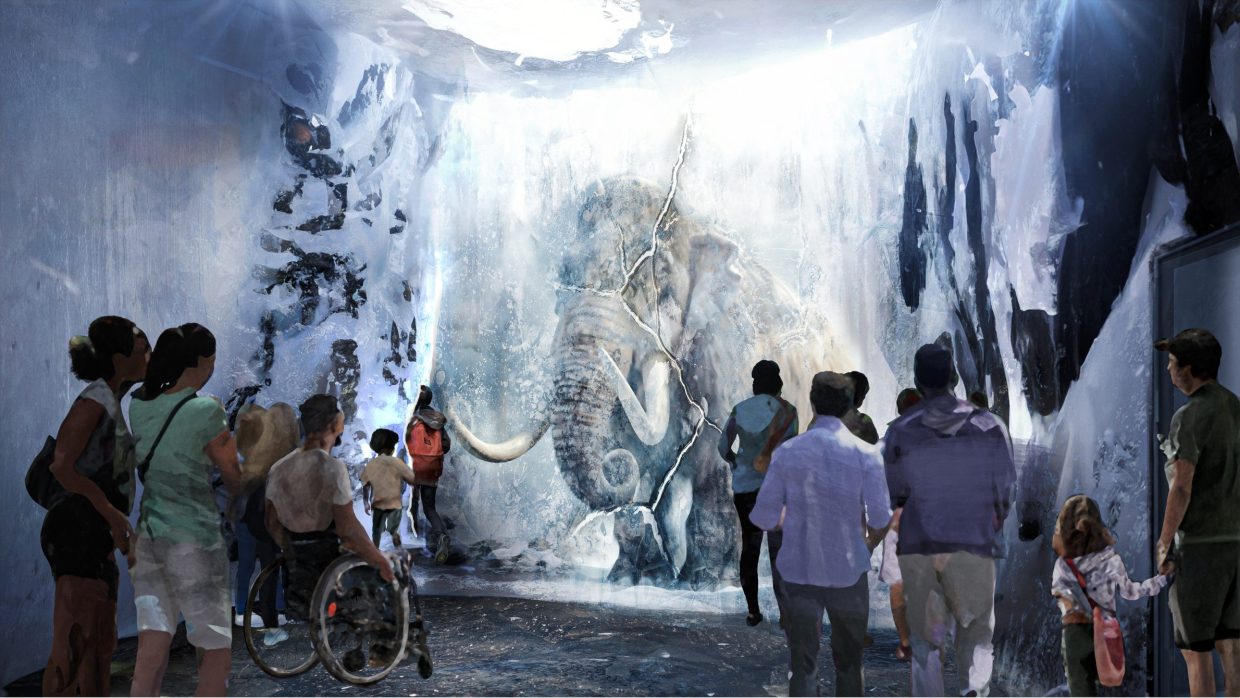
Emerging from the forest, guests arrive thousands of years in the past as the landscape begins to take shape – glaciers recede, the White River emerges, forests grow, and wildlife begins to populate the land.
Vignette 2 – People & Place
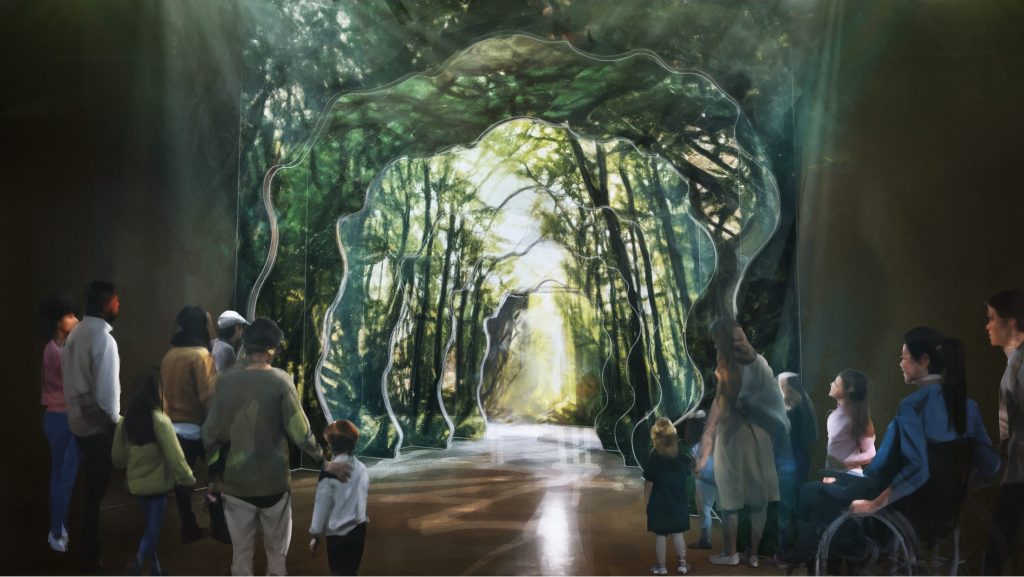
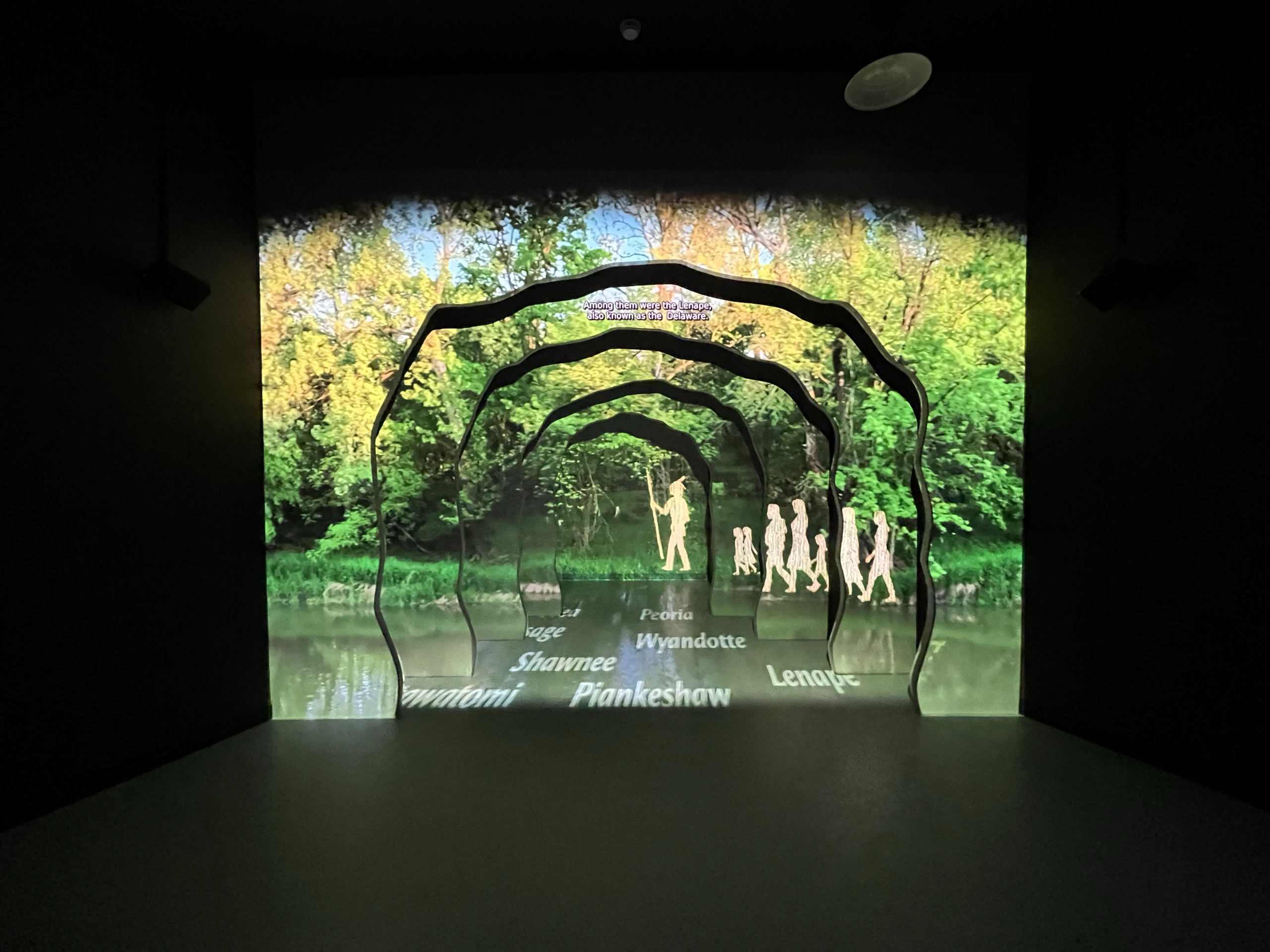
Moving forward through time, guests encounter the people who have called this land home and begin to uncover the complex and sometimes challenging histories that connect them. Their stories emerge only in glimpses, leaving unanswered questions that invite guests to discover more throughout Conner Prairie.
Vignette 3 – River & Community
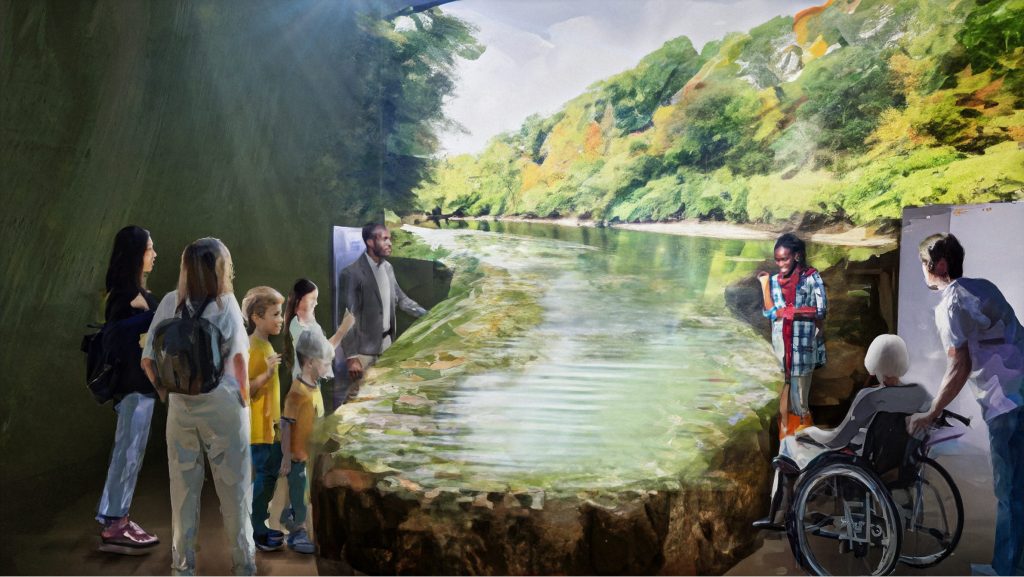
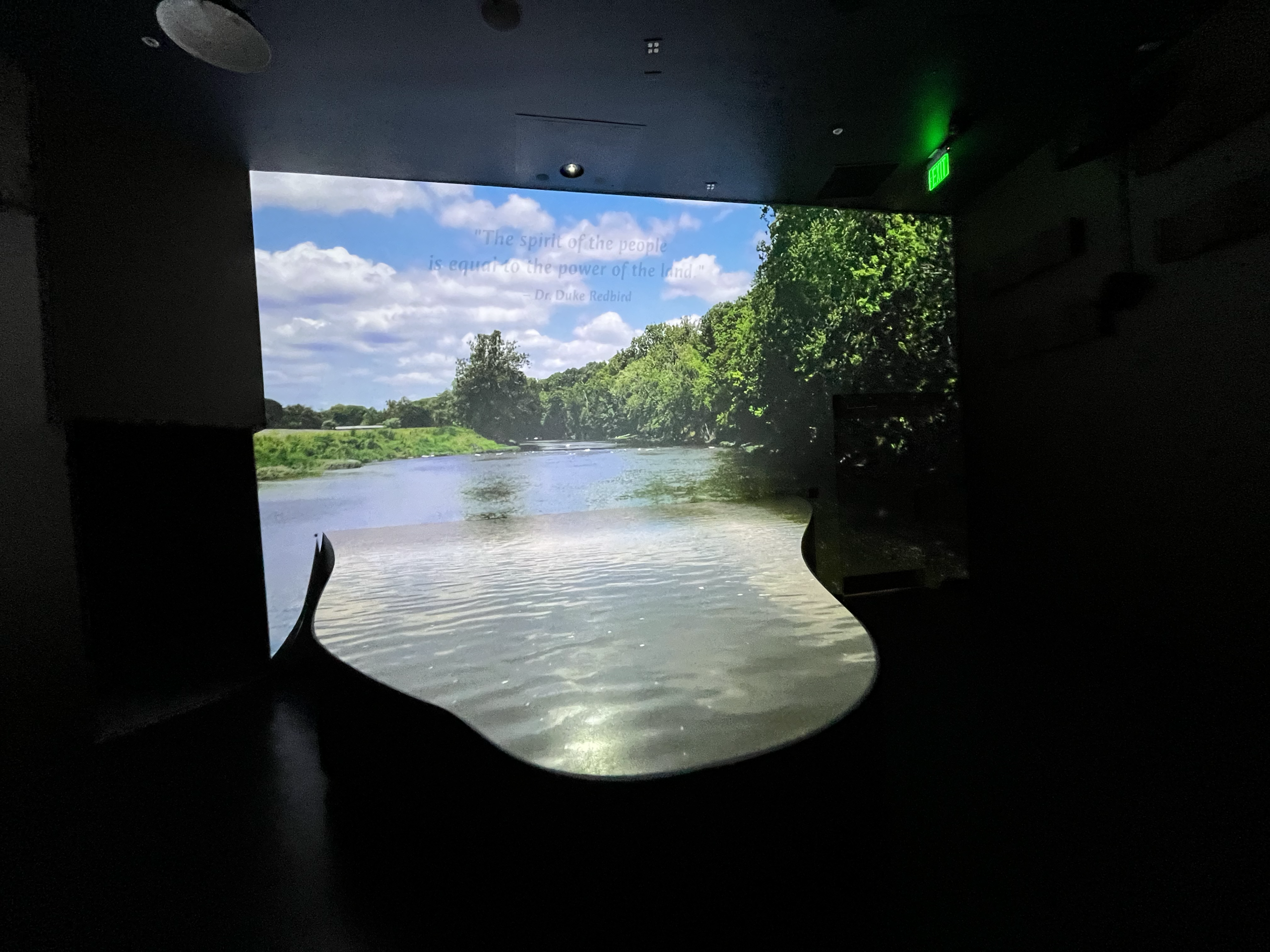
The journey returns guests to the present, where the White River connects the landscape’s past to the communities that surround it today and invites reflection on our role in caring for this place into the future.
The Result
Power of Place opened in 2026 as the introductory experience within Conner Prairie’s new Museum Experience Center. The finished experience uses immersive media, environmental storytelling, and the White River as a narrative thread to connect the natural and human histories of the site.
While the final experience evolved significantly from my earliest concepts, several foundational ideas – including time travel, rapidly unfolding history, and the river as a vehicle for exploring place – carried through the collaborative design process into the completed experience.